
How to Prevent Mosquito Breeding Grounds
Mosquito control begins with water. Mosquito larvae and pupae develop in standing or slow-moving water, including very small amounts that collect around a home.
In Southern California, invasive Aedes mosquitoes can breed in backyard containers and may bite during the day. Other mosquitoes are more active around dusk or at night. A weekly yard inspection can help reduce mosquito breeding close to your home.
Dump and Scrub Containers Every Week
At least once a week, empty and scrub, turn over, cover, or discard anything that can hold water.
Simply pouring out the water may not remove all mosquito eggs. Some species lay eggs on the inside walls of containers, where they can remain until water returns. Scrubbing helps remove those attached eggs.
Check These Common Breeding Sites
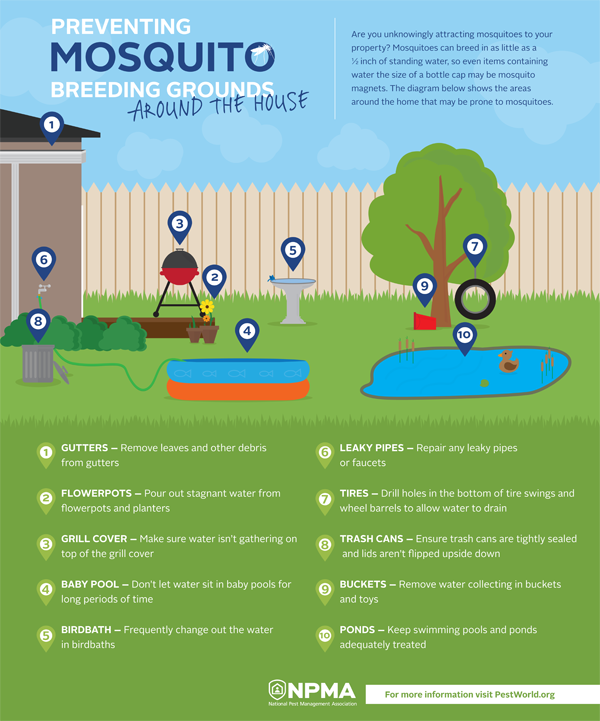
Inspect your property for water collecting in:
- Flowerpot saucers
- Buckets and watering cans
- Birdbaths
- Pet water bowls
- Children’s toys
- Kiddie pools
- Wheelbarrows
- Trash and recycling containers
- Discarded tires
- Tarps and furniture covers
- Outdoor drains
- Clogged rain gutters
- Corrugated drain extensions
- Fountains and decorative ponds
- Rain barrels
- Pool covers
- Unmaintained swimming pools
- Bromeliads and other water-holding plants
- Low areas where irrigation water collects
Even bottle caps, small toys, and plant saucers can hold enough water for mosquitoes to develop.
Maintain Swimming Pools and Spas
Keep swimming pools and spas properly filtered, treated, and maintained. An unused or neglected pool can produce large numbers of mosquitoes.
Remove standing water from pool covers and check equipment areas for leaks. If a pool will remain unused, contact your local vector-control district for guidance rather than allowing it to become green or stagnant.
Clean Gutters and Correct Drainage Problems
Remove leaves and debris from rain gutters so water can drain properly. Check landscape drains, roof drains, and downspout extensions for blockages.
Adjust sprinklers that create puddles or repeatedly fill containers. Repair leaking outdoor faucets, hoses, valves, and irrigation lines.
Low areas that remain wet may need improved grading or drainage.
Cover Water That Cannot Be Emptied
Keep rain barrels, cisterns, and water-storage containers tightly covered. If a lid cannot be used, install screening with openings small enough to keep adult mosquitoes out.
For standing water that cannot be drained or covered, an EPA-registered mosquito larvicide may be appropriate. Always follow the product label and never apply a pesticide to drinking water or natural waterways unless the label specifically permits it.
Reduce Adult Mosquito Resting Areas
Mosquitoes often rest in shaded, protected areas during the day. Trim excessive vegetation and remove unnecessary clutter around patios and exterior walls.
This can reduce resting areas, but trimming plants does not replace the need to remove standing water.
Do Mosquito Traps Eliminate the Problem?
Mosquito traps may capture some adult mosquitoes, but results vary by device, mosquito species, placement, and surrounding conditions. A trap will not correct nearby breeding water and should not replace weekly source removal.
Bug-zapper lights also kill many insects that are not mosquitoes and may provide limited mosquito relief.
Keep Mosquitoes Out of the House
Repair holes in window and door screens and make sure exterior doors close properly. Empty and scrub indoor containers that hold water, including flower vases and plant saucers.
What If the Breeding Source Is on Another Property?
Chino Hills is served by the West Valley Mosquito and Vector Control District. Residents can report persistent mosquito activity or suspected breeding sources such as green pools, clogged gutters, and standing water.
The district can be reached at (909) 635-0307.
Professional Mosquito Control
Removing breeding water is the foundation of effective mosquito management. Professional treatment may help reduce adult mosquitoes resting in vegetation and other protected areas, but mosquitoes can continue arriving from nearby properties.
Tiger Termite Control provides mosquito-control services in Chino Hills and surrounding communities. Call us at (909) 597-6953 to discuss the mosquito activity around your property.
Updated September 2026.
More articles
What are False Chinch Bugs
False Chinch Bugs in California: What Homeowners Should Know False chinch bugs are tiny, grayish-brown insects commonly found in grassy fields, weedy areas, pastures, and foothills throughout California. They occasionally migrate into Southern California yards and homes in very large numbers. Although their sudden appearance can be alarming, false chinch bugs are primarily a temporary […]
How to control Scorpions in Chino Hills
How to Control Scorpions in Chino Hills Scorpions are occasionally found around homes in Chino Hills, especially properties near hillsides, open land, or natural areas. They are most active at night during warm weather and usually hide during the day. While most California scorpion stings cause localized pain, homeowners should still avoid handling scorpions and […]
Carpet Beetles
How to Get Rid of Carpet Beetles in Your Home Carpet beetles are small household pests whose larvae can damage certain fabrics and other materials containing natural animal fibers. Finding an occasional adult beetle does not always mean you have an infestation, but discovering larvae, shed skins, or damaged belongings deserves further investigation. Successful carpet […]